
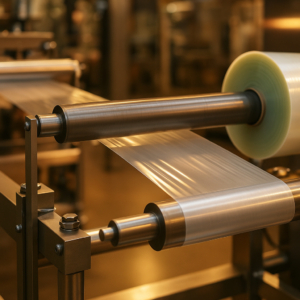
Sustainability is rewriting the rules of packaging, and nowhere is that more evident than on the factory floor.
Nestlé is taking an unconventional approach to packaging: turning cheese whey, a dairy byproduct, into a biodegradable material for its ¡Qué Rico! line in Panama. The pilot could generate over 5,000 tons of this new packaging, marking another step toward circular manufacturing.
For production teams, however, that kind of innovation brings a familiar reality: every new material means a new set of variables to tune, test, and troubleshoot on the line.
The Material Shift
The whey-based material is converted into polyhydroxyalkanoate (PHA): a biopolymer that performs like plastic but breaks down naturally, even in marine environments. It offers the strength and barrier qualities of traditional packaging, without the environmental cost.
For packaging teams, that’s where the challenge begins. Bio-based films don’t always run like their predecessors; they react differently to heat, tension, and humidity, often causing seal issues or misfeeds during startup. Each adjustment demands clear visibility into what’s happening on the line.
As sustainable materials enter mainstream production, success depends as much on line visibility and rapid troubleshooting as on the innovation itself.
Real-World Challenges
Even the most sustainable materials introduce new unknowns once they hit the line:
- Material Performance: Whey-based PHA behaves differently during sealing, forming, and handling than standard plastics.
- Process Adaptation: Heat, pressure, and speed settings often need recalibration to keep throughput and quality consistent.
- Scaling Risks: What works in a pilot run doesn’t always translate cleanly to full-scale production.
Without clear visibility into how the material interacts with the equipment, small variances can cascade into downtime, waste, or incorrect assumptions about root causes.
LineSpex in Action
When new materials meet real production environments, visibility is everything. LineSpex captures high-speed, frame-by-frame video at key points on the line, giving teams the insight needed to fine-tune processes and prevent recurring issues.
- See Material Behavior: Watch how whey-based PHA moves, seals, and reacts inside equipment in real time or slow motion.
- Correlate Issues: Connect misfeeds, seal failures, or jams to exact timestamps and machine data for faster diagnosis.
- Train with Real Footage: Turn actual trial clips into on-the-job learning tools so teams can replicate improvements consistently.
For example, a team testing bio-based films could identify heat-seal inconsistencies within the first few hours of a trial (rather than days later) by reviewing slow-motion footage from LineSpex cameras. That level of visibility can make the difference between a successful pilot and a stalled rollout.
With LineSpex, production teams gain the visual proof they need to validate adjustments, shorten ramp-up time, and scale innovations with confidence.
See what’s really happening on your line.
Explore how leading manufacturers use high-speed video analysis to troubleshoot startup issues and stabilize new materials.

